

Is A Makeup Assistant An Independent Contractor

Protesters hand out flyers pushing for benefits for hair and makeup workers at The Atlanta Opera. Matthew Pearson hibernate caption
toggle caption
Matthew Pearson
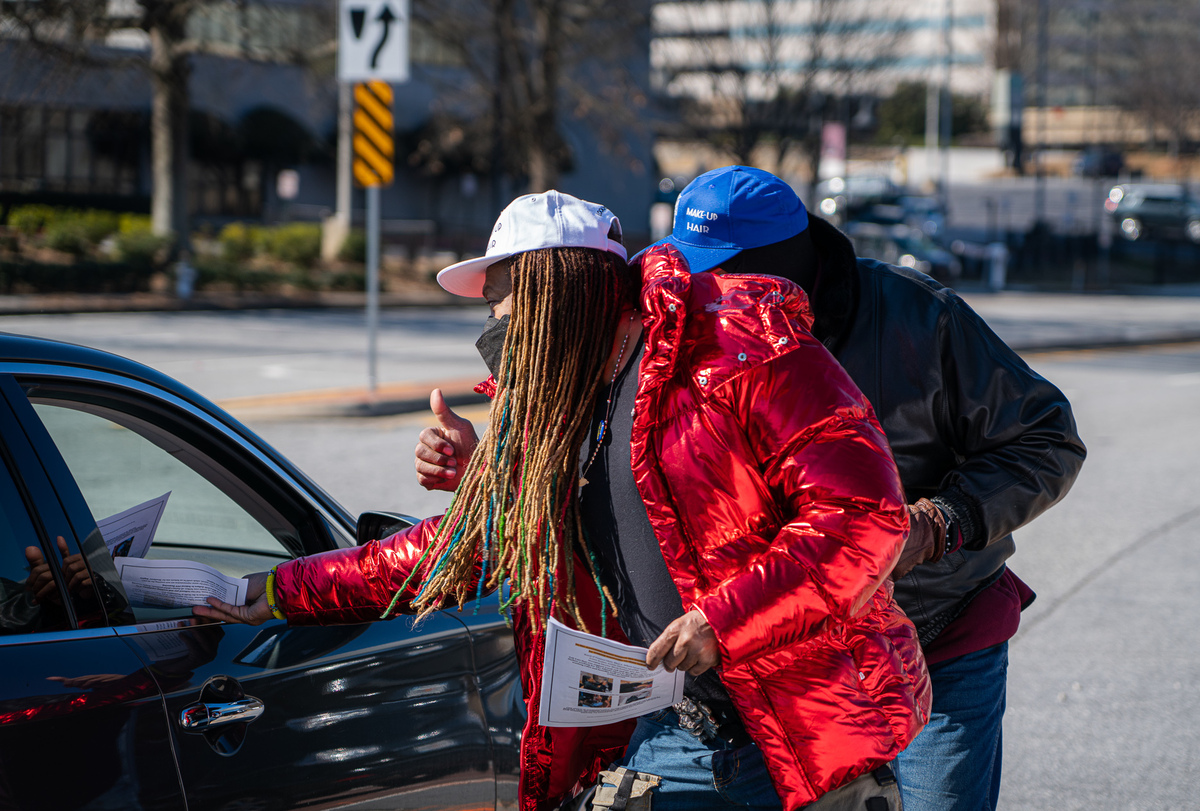
Protesters paw out flyers pushing for benefits for hair and makeup workers at The Atlanta Opera.
Matthew Pearson
Hair and makeup workers at The Atlanta Opera are at the center of a labor dispute that could take widespread implications across all industries. It's over a question that's indomitable workplaces for decades: who gets to be an employee and who gets to be an independent contractor?
The National Labor Relations Lath signaled recently that it was going to use their case to reexamine that question. But in the meantime, the pilus and makeup workers at The Atlanta Opera are stuck in limbo.
Back in spring 2020, after an initial cancellation of shows, The Atlanta Opera came back with a run of outdoor performances. It was a welcome return to nearly-normalcy for pilus stylist Sakeitha King – but still a little scary. This was earlier we knew what we know now virtually COVID, before the waves of variants, before vaccines.
"It was nearly like playing Russian roulette," says King.
She and her beau hair and makeup stylists wanted health insurance, so they started talking most joining a spousal relationship and securing a collective bargaining agreement. They got in touch with the International Brotherhood of Theatrical Stage Employees (IATSE) and started the procedure for a marriage ballot.
So, The Atlanta Opera stepped in to say that the hair and makeup workers were actually independent contractors and non employees, and therefore could not collectively bargain. They argued that the hair and makeup workers were hired on a show-by-testify footing, were free to take on exterior work of their own, and largely worked unsupervised. The Atlanta Opera declined an interview request.
The amount of command a business has over a worker is at the core of the statement about whether they tin can exist classified equally employees, says Jeff Hirsch, a professor at University of Due north Carolina Schoolhouse of Law, focusing on labor and employment constabulary. "Traditionally, the sort of overriding concern is whether or not the business has control over the manner and means in which the worker does the work. And every bit the control increases, the likelihood that the worker volition be considered an employee also increases," he says.
But the regional NLRB sided with the hair and makeup workers, who then went ahead with the ballot. So, The Atlanta Opera appealed. Now the ballots are impounded, shelved and uncounted until the NLRB mothership decides whether the workers are employees – and therefore eligible for protections offered by the National Labor Relations Human activity – or independent contractors, who aren't.
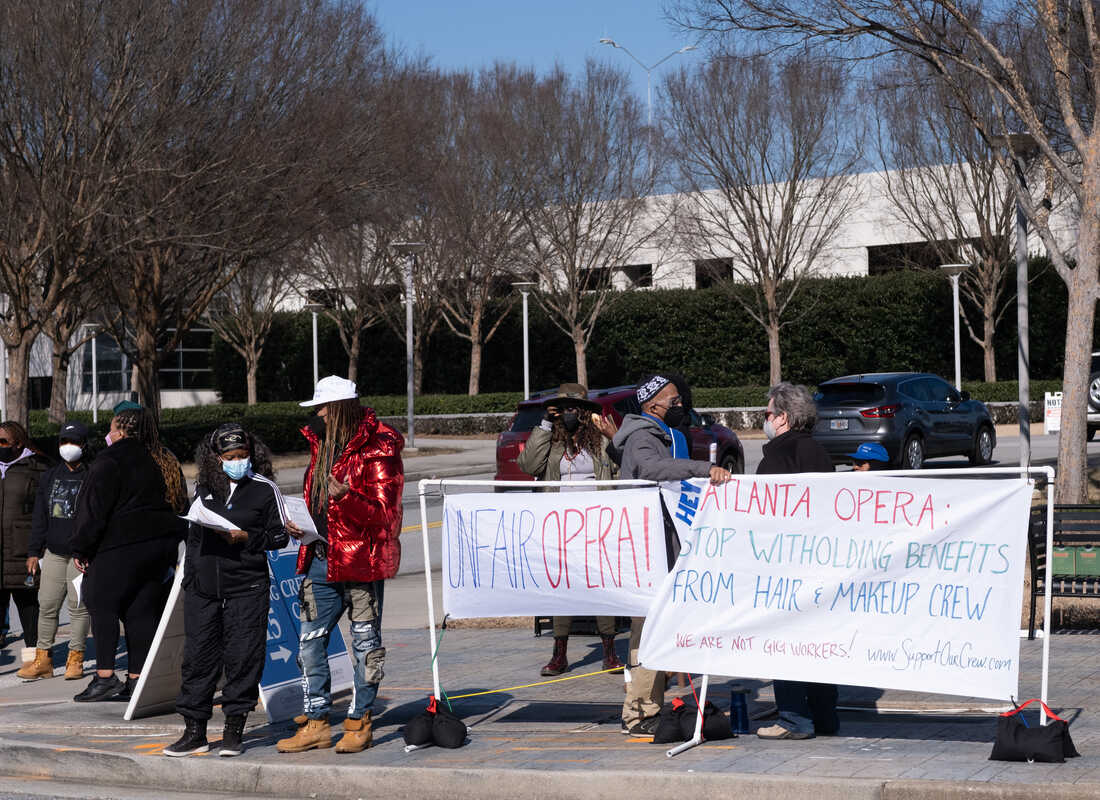
Hair and makeup workers at The Atlanta Opera started the push to unionize in 2020, when they went back to piece of work without healthcare benefits in the midst of the pandemic. Courtesy IATSE Local 798 hide caption
toggle explanation
Courtesy IATSE Local 798
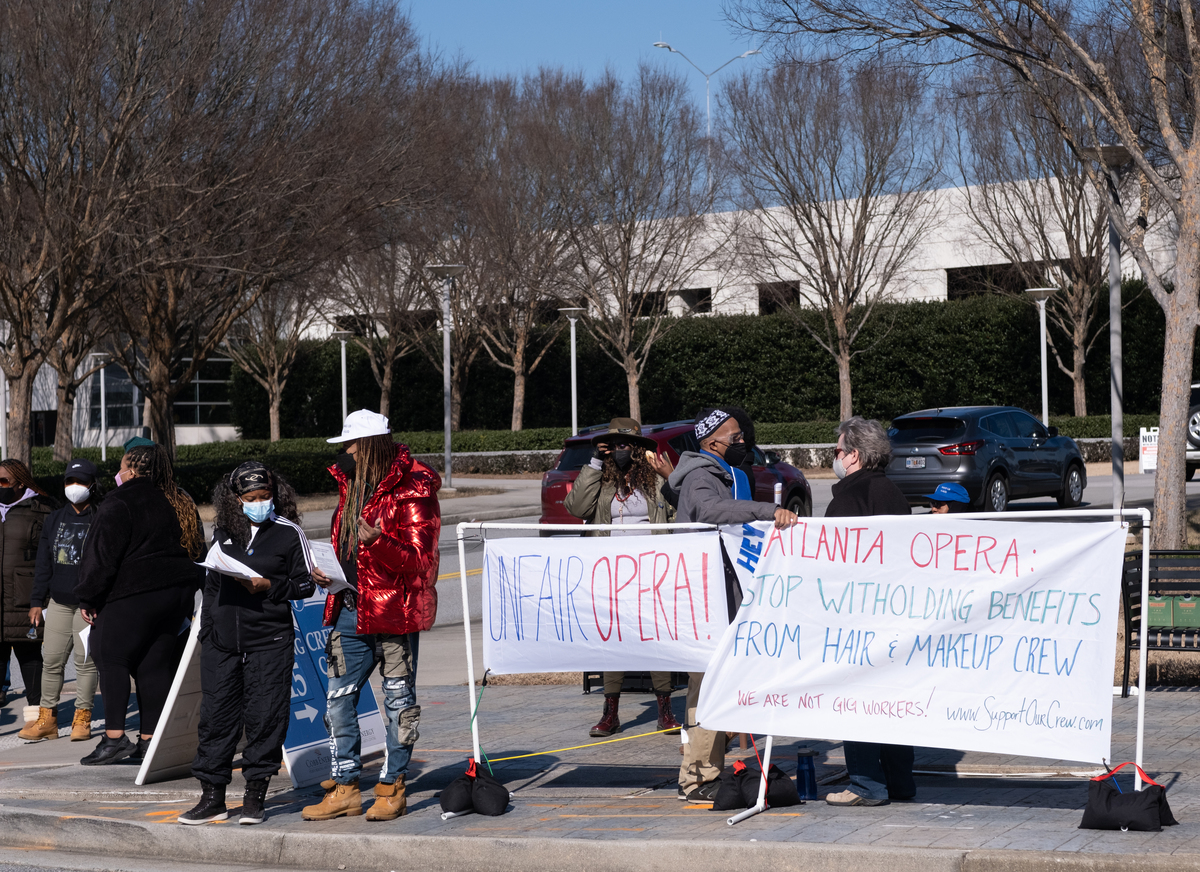
Hair and makeup workers at The Atlanta Opera started the push to unionize in 2020, when they went dorsum to work without healthcare benefits in the midst of the pandemic.
Courtesy IATSE Local 798
"It is quite common for employers that are opposing a marriage election to create delays in a diversity of manners, because basically filibuster is expiry for unions," says Hirsch.
The debate over who gets classified every bit an contained contractor and who gets classified equally an employee goes back ages. But in 2014, the NLRB made a ruling that adamant a new standard that made it relatively easier to go classified every bit an employee. Then, during the Trump assistants, the NLRB rolled back those criteria. Now legal experts encounter the pendulum swinging back to the 2014 standards under the Biden administration. And if that happens, Hirsch sees information technology equally a signal that the Biden administration is interested in taking more than concrete steps to broaden the definition of an employee.
Nomenclature issues are widespread, especially in the arts, says Hirsch, where productions are temporary and workers can stop up working for multiple businesses. But these are issues that are present in the always-growing gig economic system. And without changes in the law, Hirsch says, these questions will likely continue to popular up.
The hair and makeup workers at The Atlanta Opera have been frustrated with what they say is a lack of communication from management, especially as they found out they were working backstage alongside people who were unionized. "Some crews were getting overtime on the weekends, and some crews were getting paid competitively in their field," says pilus and make-upwardly stylist Brie Hall. "And nosotros weren't, as pilus and makeup artists, at all."
Hall sees this as a double standard, ane that particularly stings for the mostly Black hair and makeup workers equally The Atlanta Opera touts its commitments to multifariousness and equity.
"Information technology feels unfair and it feels prejudiced to piece of work alongside people backstage who do have spousal relationship contracts and are considered workers, just in some type of way, we're not," says Hall.
Neither Male monarch nor Hall have worked any shows at The Atlanta Opera since the union vote. And it could take months before the NLRB issues a ruling.
Source: https://www.npr.org/2022/02/20/1082037494/atlanta-opera-hair-and-makeup-workers-iatse
Posted by: cashhincir.blogspot.com
0 Response to "Is A Makeup Assistant An Independent Contractor"
Post a Comment